Addendo ブックマークマネージャー
← Juegos de mesa の内側 公開コレクション

Para iniciarse

Juegos para empezar en este mundillo, cada uno en la lista suele tener mecánicas distintas. Hay un tipo de juego para cada uno

GAGato のキュレーション ・1コントリビューター
コメントするにはログインしてください会話
モザイク14アイテム1人の貢献者

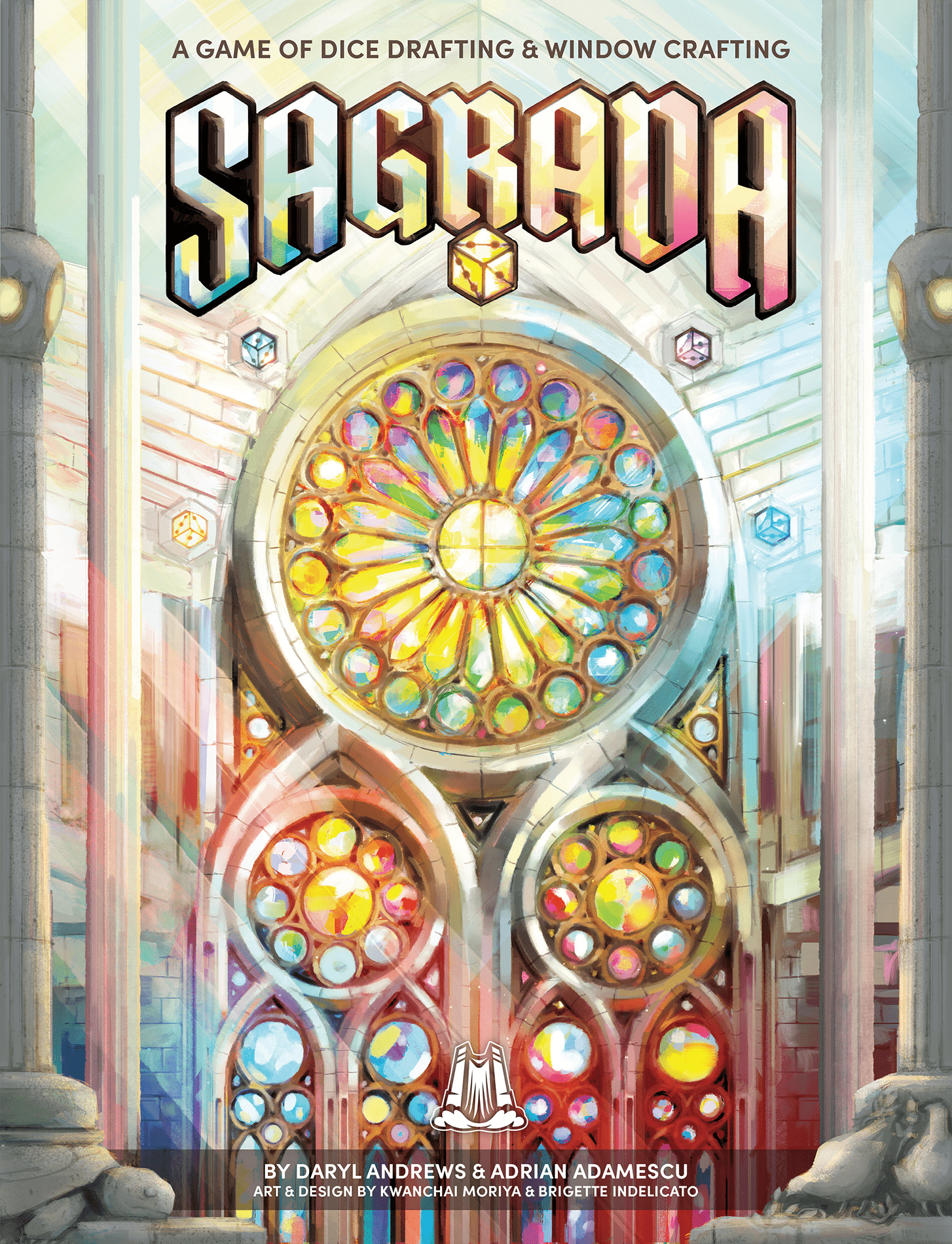
Sagrada

Draft dice and use the tools-of-the-trade in Sagrada to carefully construct your stained glass window masterpiece. In more detail, each player builds a stained glass window by building up a grid of dice on their player board. Each board has some restrictions on which color or shade (value) of die can be placed there. Dice of the same shade or color may never be placed next to each other. Dice are drafted in player order, with the start player rotating each round, snaking back around after the last player drafts two dice. Scoring is variable per game based on achieving various patterns and varieties of placement...as well as bonus points for dark shades of a particular hidden goal color. Special tools can be used to help you break the rules by spending skill tokens; once a tool is used, it then requires more skill tokens for the other players to use them. The highest scoring window artisan wins!
@Gato#board-game

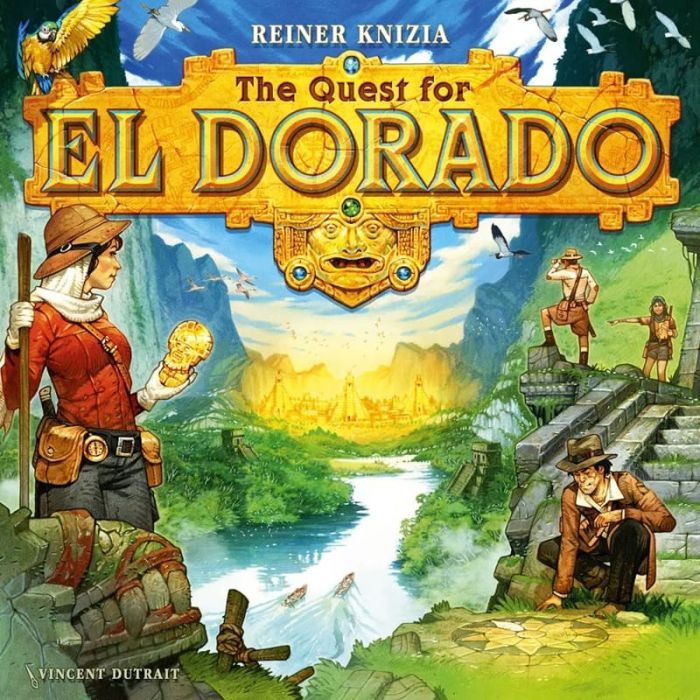
The Quest for El Dorado

In The Quest for El Dorado, players take the roles of expedition leaders who have embarked on a search for the legendary land of gold in the dense jungles of South America. Each player assembles and equips their own team, hiring various helpers from the scout to the scientist to the aborigine. All of them have one goal in mind: Reaching the golden border first and winning all of the riches for themselves. Whoever chooses the best tactics will be rewarded! Each player starts with a face-down deck of 8 cards— his or her expedition —to draw from. You start each turn with 4 cards in your hand. Use expedition cards to move through the jungle or hire more people for your expedition. Each card in your hand can only be used once per turn - to move or to buy 1 new card. When a player reaches one of the 3 finishing spaces, he moves to El Dorado and this triggers the final round. The other players will now play their final turn. Once the round is completed, the game is over. If the final round ends up with multiple players reaching El Dorado, the player who has collected the most blockades wins the game.

@Gato#board-game

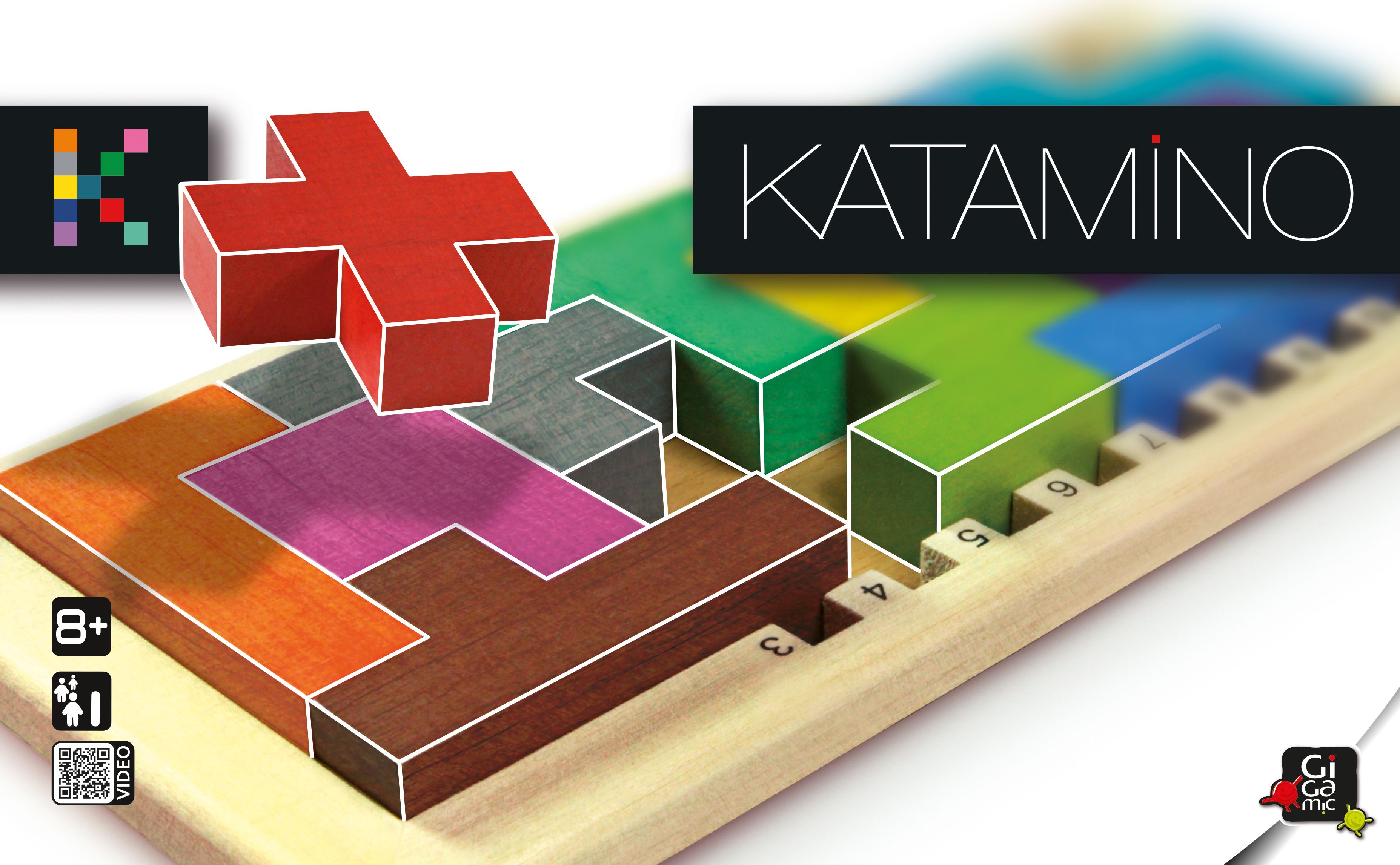
Katamino

The game consists of 12 different pieces constructed of right angled blocks so each piece is made of 5 "squares". (Think Tetris pieces, but 5 squares instead of 4.) An old version of the game had only 10 pieces; the completely straight 5 square and the 5 square "plus sign" were not included. Both versions also have a bunch of "filler" pieces of 1 or 2 squares. The gameboard is constructed with a movable divider so one can take sets of 4 up to the whole set of 12 pieces and form them into a 5 block by X rectangle. (Where X = the number of wood blocks in your set.) The two or three player strategy game is accomplished on a square board divided into 64 smaller squares. Players take turns to place a piece on the gameboard. The first player who cannot place a piece anymore loses. (Similar to Blokus) The two player puzzle game mode is accomplished by dividing the board into two sections, each player chooses five blocks and are also given 4 small "filler" blocks of 1 and 2 squares. The first one to fit all their blocks perfectly into their half of the rectangle board, wins.

@Gato#board-game

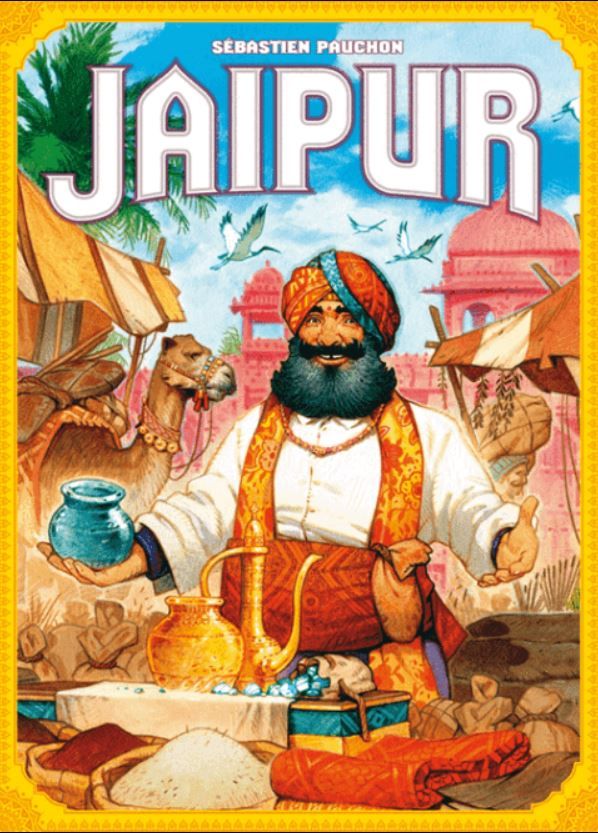
Jaipur

You are one of the two most powerful traders in the city of Jaipur, the capital of Rajasthan, but that's not enough for you because only the merchant with two "seals of excellence" will have the privilege of being invited to the Maharaja's court. You are therefore going to have to do better than your direct competitor by buying, exchanging, and selling at better prices, all while keeping an eye on both your camel herds. Jaipur is a fast-paced card game, a blend of tactics, risk and luck. On your turn, you can either take or sell cards. If you take cards, you have to choose between taking all the camels, taking one card from the market, or swapping 2-5 cards between the market and your cards. If you sell cards, you get to sell only one type of good, and you receive as many chips for that good as the number of cards you sold. The chips' values decrease as the game progresses, so you'd better hurry! On the other hand, you receive increasingly high rewards for selling three, four, or five cards of the same good at a time, so you'd better wait! You can't sell camels, but they're paramount for trading and they're also worth a little something at the end of the round, enough sometimes to secure the win, so you have to use them smartly.

@Gato#board-game

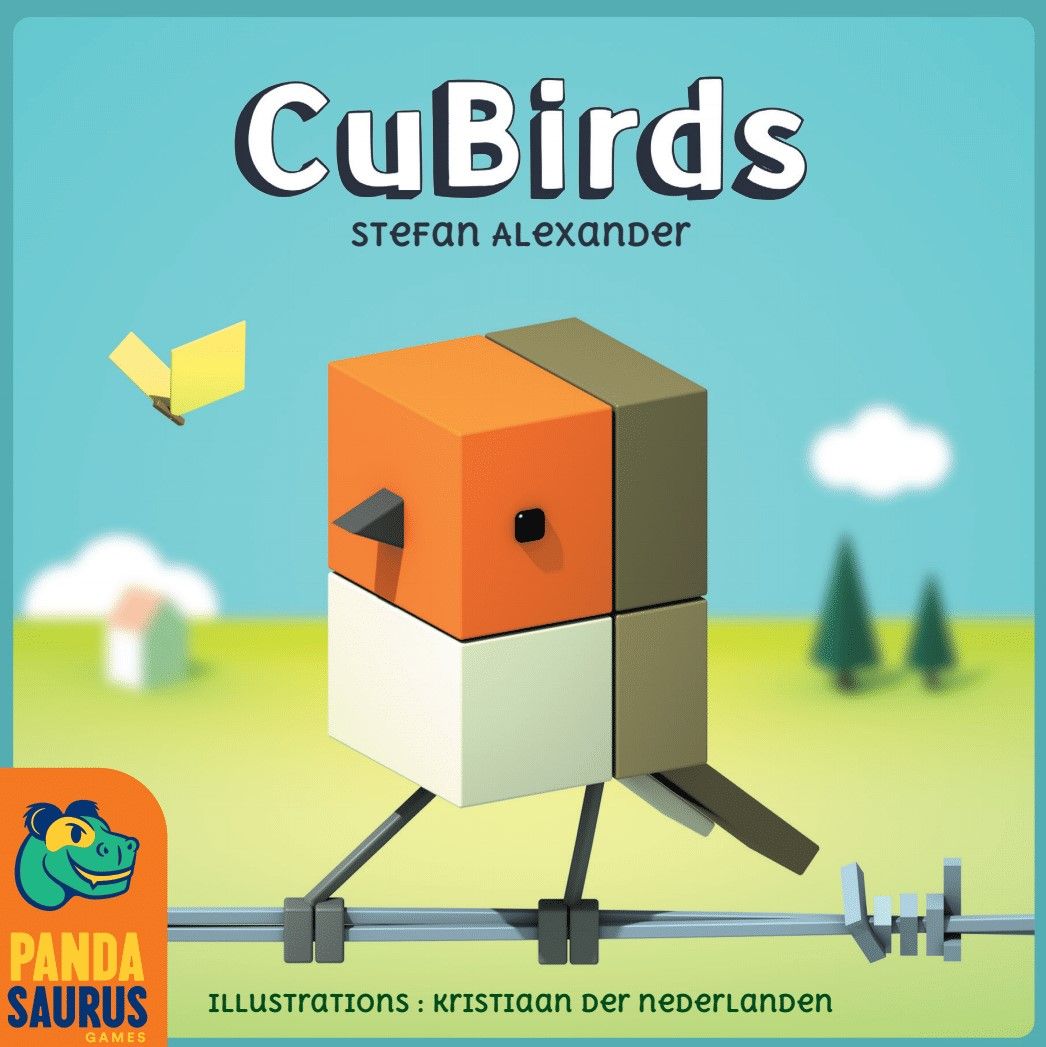
CuBirds

Every day, dozens of birds have a stop on the fences of our countryside. When it is time to leave, all these birds mix together, unable to organize themselves into flocks to fly home. Help them find their way back to their nest. Players begin each new round of CuBirds with eight bird cards in hand. Some birds also sit on four distinct fences on the table. On your turn, you lay a series of identical birds from your hand on one fence's extremity. These birds instantly gather with any identical bird already present on this fence, making all birds placed in-between them fly into your hand. With enough identical birds in your hand, you can perform a flock, allowing you to add some of these birds in your scoring area. Your ultimate goal is to be the first player to gather in your scoring area either seven different species, or two species with at least three identical birds in each. Each bird comes with one small and one big flock scores, so you may want to wait to reach a big flock to add more birds at once to your scoring area. Beware, though, as the round ends as soon as a player empties their hand, forcing all players to discard their current hands and plans!

@Gato

Sea Salt & Paper

During your turn, you assemble your hand, maybe place cards for their effect, and decide if you want to end the round. But do you think you are the one with the most points in hand? You will have to choose: stop the round immediately or give the others an extra turn to try to extend the gap? Is it worth taking the risk? The game ends when you reach 30/35/40 points (4/3/2 players).

@Gato

Welcome To...

As an architect in Welcome To..., you want to build the best new town in the United States of the 1950s by adding resources to a pool, hiring employees, and more. Welcome To... plays like a roll-and-write dice game in which you mark results on a score-sheet...but without dice. Instead you flip cards from three piles to make three different action sets with both a house number and a corresponding action from which everyone chooses one. You use the number to fill in a house on your street in numerical order. Then you take the action to increase the point value of estates you build or score points at the end for building parks and pools. Players also have the option of taking actions to alter or duplicate their house numbers. And everyone is racing to be the first to complete public goals. There's lots to do and many paths to becoming the best suburban architect in Welcome To...! Because of the communal actions, game play is simultaneous and thus supports large groups of players. With many varying strategies and completely randomized action sets, no two games will feel the same!

@Gato

Harmonies

In Harmonies, build landscapes by placing colored tokens and create habitats for your animals. To earn the most points and win the game, incorporate the habitats in your landscapes wisely and have as many animals as you can settle there. Starting with the first player and proceeding clockwise, each player will choose a set of 3 terrain tokens from the central area to place on their personal board. They may optionally choose an Animal card from the 5 displayed and/or place an Animal cube from their Animal card(s) on any completed patterns on their board that match their personal Animal cards. There is a 4-card limit per player. After their turn, refill with a new set of 3 tokens and a new Animal card if needed. Placement of the terrain tokens will depend on the personal Animal card goals, and scoring rules for the various terrain types (mountain, field, forest, etc). For example, mountain tiles score based on how high they are (1 tile scores 1, while 3 tiles stacked score 7), but the mountain scores zero if it is not adjacent to at least one other mountain. If all the cubes on a given Animal card have been placed, the card is set aside and a new card can be drawn. The cards are scor

@Gato

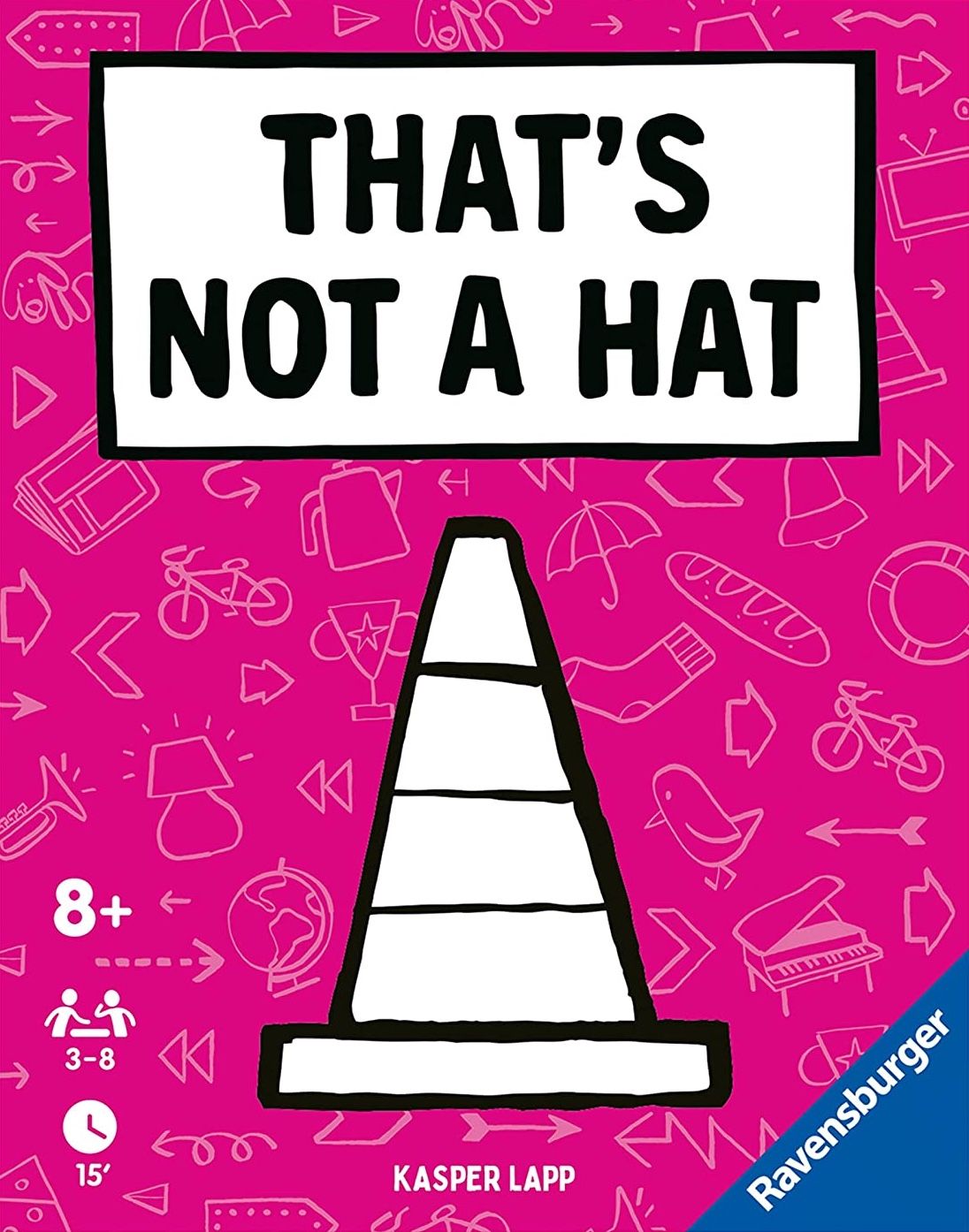
That's Not a Hat

Can you remember a few items? Sounds easy? It's a challenge in "That's not a Hat"! Players give gifts to each other while trying to remember who gave what and which gift they have in front of them. If they can't remember, they have to bluff to avoid a penalty point. An unforgettable game!

@Gato

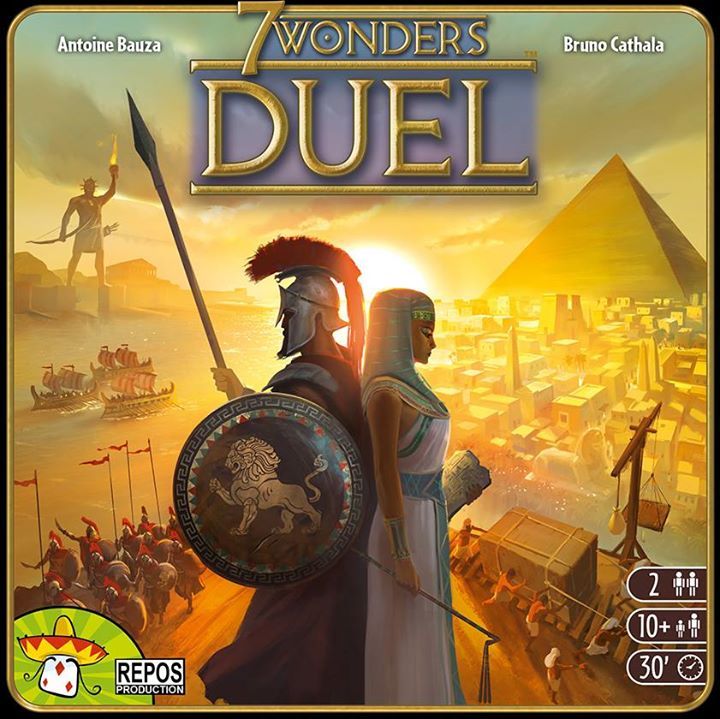
7 Wonders Duel

In many ways 7 Wonders Duel resembles its parent game 7 Wonders. Over three ages, players acquire cards that provide resources or advance their military or scientific development in order to develop a civilization and complete wonders. What's different about 7 Wonders Duel is that, as the title suggests, the game is solely for two players. Players do not draft cards simultaneously from decks of cards, but from a display of face-down and face-up cards arranged at the start of a round. A player can take a card only if it's not covered by any others, so timing comes into play, as it can with bonus moves that allow the player to take a second card immediately. As in the original game, each acquired card can be built, discarded for coins, or used to construct a wonder. Each player also starts with four wonder cards, and the construction of a wonder provides its owner with a special ability. Only seven wonders can be built, though, so one player will end up short. Players can purchase resources at any time from the bank, or they can gain cards during the game that provide them with resources for future building; as they are acquired, the cost for those resources increases for the opponen

@Gato

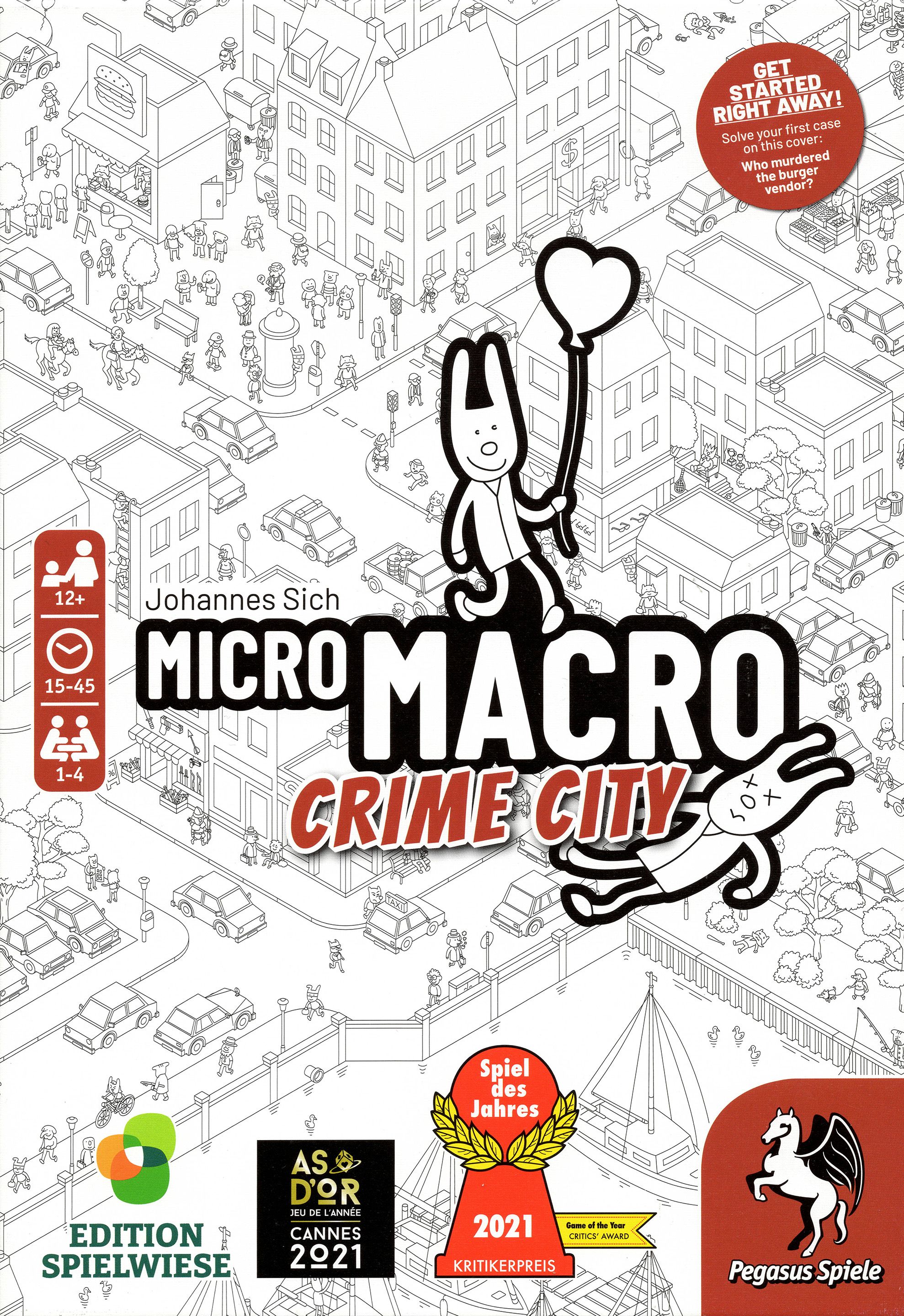
MicroMacro: Crime City

Crimes have taken place all over the city, and you want to figure out exactly what's happened, so you'll need to look closely at the giant city map (75 x 110 cm / 29.5 x 43 inches) to find all the hidden information and trace the trails of those who had it in for their foes. MicroMacro: Crime City includes 16 cases for you to solve. Each case includes a number of cards that ask you to find something on the map or uncover where someone has gone or otherwise reveal information relevant to a case. The city map serves as a map in time as well as space, so you'll typically find people in multiple locations throughout the streets and buildings, and you need to piece together what happened, whether by going through the case card by card or by reading only the starting card in the case and trying to figure out everything that happened for yourself. Will you be able to answer all questions about the case without fail? The second edition of MicroMacro: Crime City now marks each case with symbols so that parents can decide which cases the youngest investigators are cleared to research.

@Gato

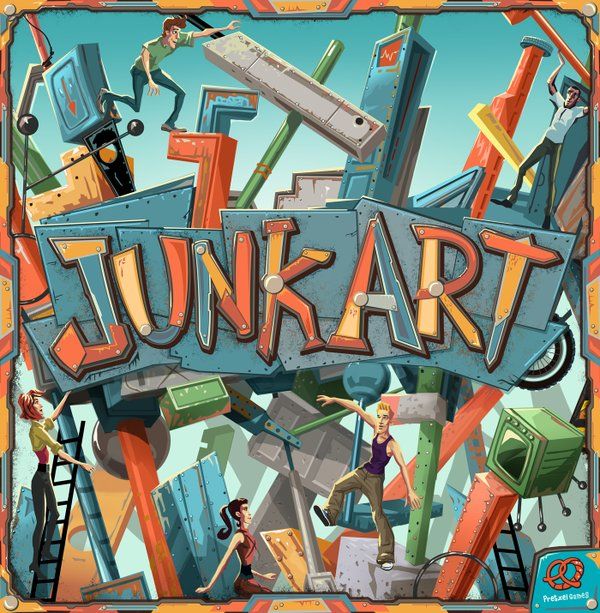
Junk Art

In Junk Art, players are presented with junk from which they must create art. Thus the name. Junk Art contains more than ten game modes, along with more than sixty big colorful wooden or plastic components. In one version of the game, players pile all of the wooden or plastic parts in the center of the table, then are dealt a number of cards, with each card depicting one of these parts. On a turn, a player presents their left-hand neighbor with two cards from their hand. This neighbor takes one card in hand, then takes the part shown on the other card and places it on their base or on other parts that they've already placed. If something falls, it stays on the table and the player continues to build on whatever still stands. Once players have finished playing cards, whoever has the tallest work of art wins.

@Gato

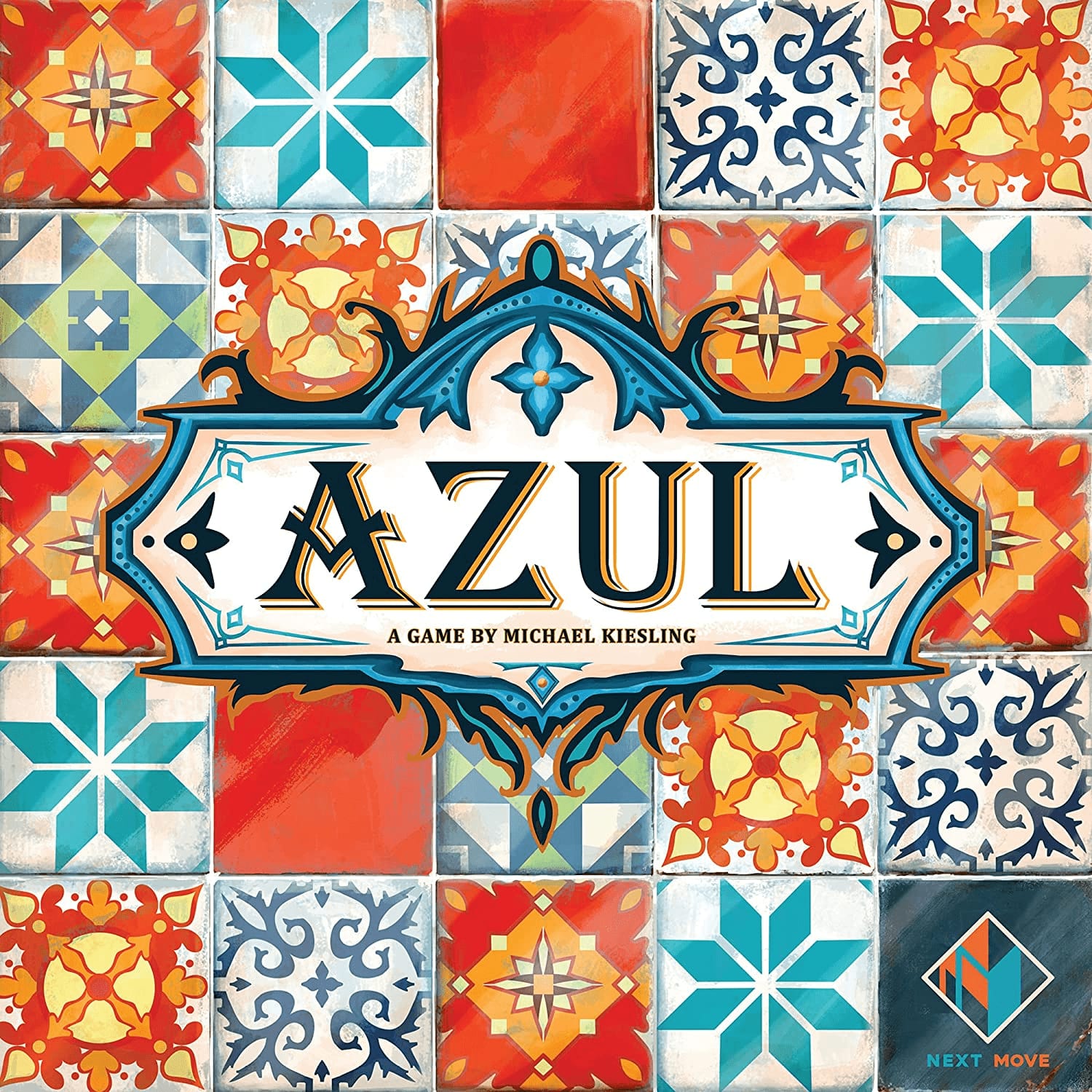
Azul

Introduced by the Moors, azulejos (originally white and blue ceramic tiles) were fully embraced by the Portuguese when their king Manuel I, on a visit to the Alhambra palace in Southern Spain, was mesmerized by the stunning beauty of the Moorish decorative tiles. The king, awestruck by the interior beauty of the Alhambra, immediately ordered that his own palace in Portugal be decorated with similar wall tiles. As a tile-laying artist, you have been challenged to embellish the walls of the Royal Palace of Evora. In the game Azul, players take turns drafting colored tiles from suppliers to their player board. Later in the round, players score points based on how they've placed their tiles to decorate the palace. Extra points are scored for specific patterns and completing sets; wasted supplies harm the player's score. The player with the most points at the end of the game wins.

@Gato

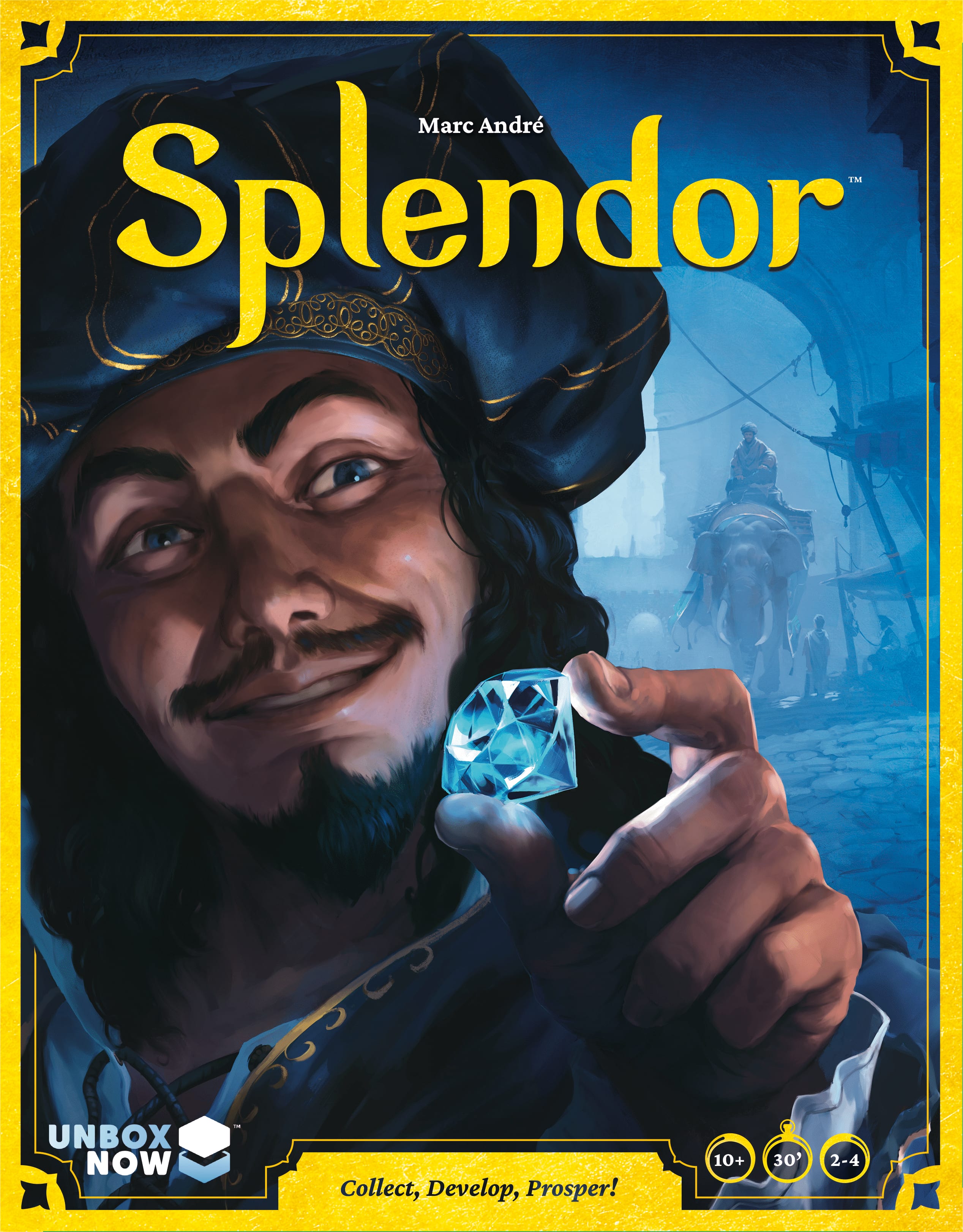
Splendor

Splendor is a game of chip-collecting and card development. Players are merchants of the Renaissance trying to buy gem mines, means of transportation, shops—all in order to acquire the most prestige points. If you're wealthy enough, you might even receive a visit from a noble at some point, which of course will further increase your prestige. On your turn, you may (1) collect chips (gems), or (2) buy and build a card, or (3) reserve one card. If you collect chips, you take either three different kinds of chips or two chips of the same kind. If you buy a card, you pay its price in chips and add it to your playing area. To reserve a card—in order to make sure you get it, or, why not, your opponents don't get it—you place it in front of you face down for later building; this costs you a round, but you also get gold in the form of a joker chip, which you can use as any gem. All of the cards you buy increase your wealth as they give you a permanent gem bonus for later buys; some of the cards also give you prestige points. In order to win the game, you must reach 15 prestige points before your opponents do.

@Gato