Para jugones de culo duro, partidas largas para disfrutar en compañia
GAGato のキュレーション ・1コントリビューター
モザイク7アイテム1人の貢献者
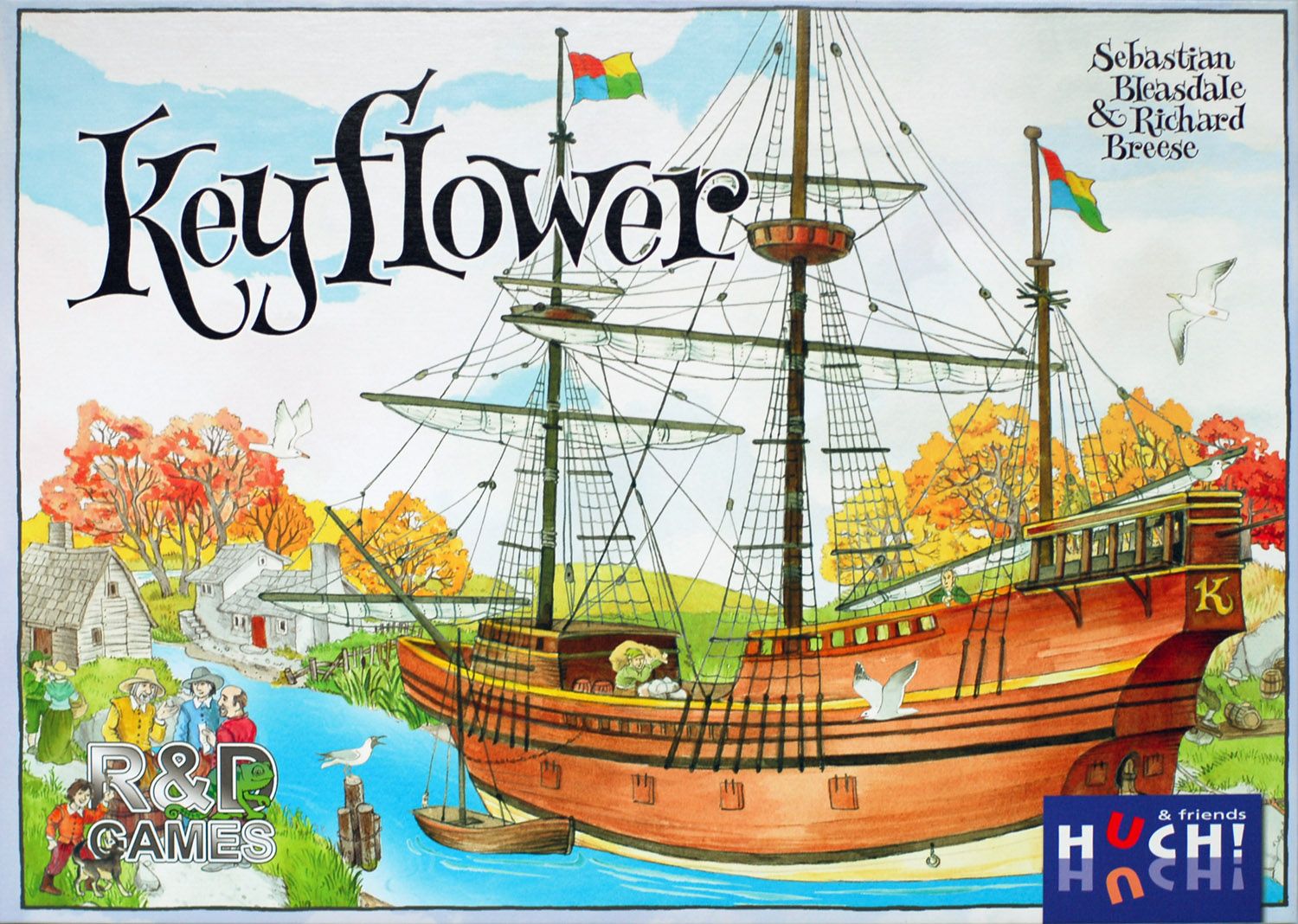
Keyflower
Keyflower is a game for two to six players played over four rounds. Each round represents a season: spring, summer, autumn, and finally winter. Each player starts the game with a "home" tile and an initial team of eight workers, each of which is colored red, yellow, or blue. Workers of matching colors are used by the players to bid for tiles to add to their villages. Matching workers may alternatively be used to generate resources, skills and additional workers, not only from the player's own tiles, but also from the tiles in the other players' villages and from the new tiles being auctioned.
In spring, summer and autumn, more workers will arrive on board the Keyflower and her sister boats, with some of these workers possessing skills in the working of the key resources of iron, stone and wood. In each of these seasons, village tiles are set out at random for auction. In the winter no new workers arrive and the players select the village tiles for auction from those they received at the beginning of the game. Each winter village tile offers VPs for certain combinations of resources, skills and workers. The player whose village and workers generate the most VPs wins the game.
Keyflower presents players with many different challenges and each game will be different due to the mix of village tiles that appear in that particular game. Throughout the game, players will need to be alert to the opportunities to best utilize their various resources, transport and upgrade capability, skills and workers.
Keyflower, a joint design between Richard Breese and Sebastian Bleasdale, is the seventh game in the "Key" series from R&D Games set in the medieval "Key" land.
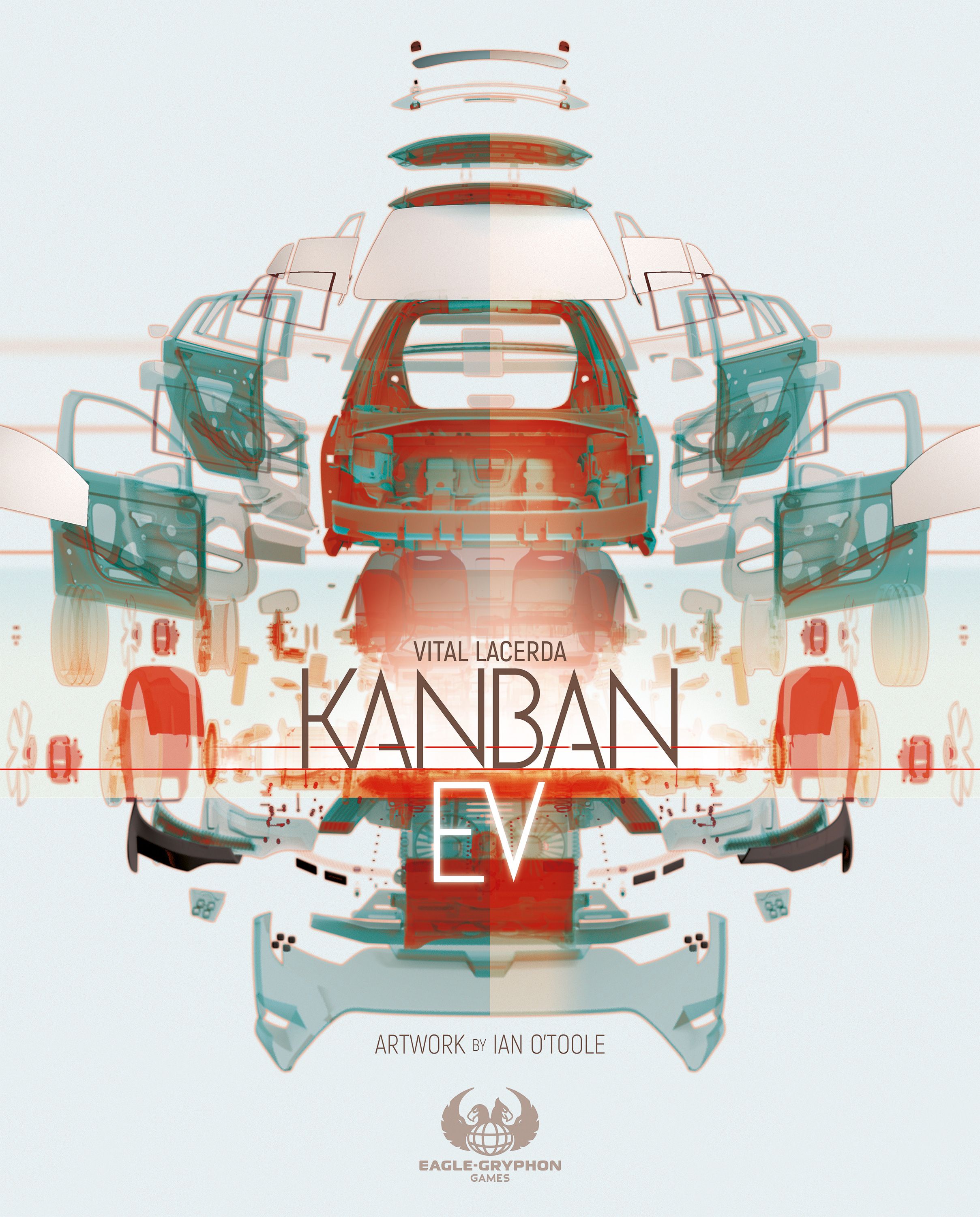
Kanban EV
Electric vehicles (EVs) have become more common since 2014 and are the future of the automobile industry. They are superior vehicles due to them being more efficient, easier to maintain, cleaner, and cheaper to run. They are computerized machines that use AI to improve safety and in the near future will provide autonomous driving. They receive software upgrades during their lifetime and are constantly improving, unlike their traditional combustion-engine counterparts, which start to become obsolete as soon as you start using them.
You will be overseeing the production of these vehicles in Kanban EV, with "kanban" (看板) being the name for a scheduling system that supports an efficient assembly line, just-in-time production, and a smooth workflow process. Over the course of the game, players take on the role of rookie employees who are trying to secure their career. You need to manage suppliers and supplies, improve and innovate automobile parts, and get your hands greasy on the assembly line in order to boost production and impress the factory manager.
You must make shrewd use of the recycling facilities and the limited factory supplies in order to appropriate parts when the suppliers come up short. Because the factory must run at optimum efficiency, production doesn't wait for you or for mistakes. Sandra, the factory manager, will review your performance and keep the factory on tempo.
Kanban EV is a game that focuses on resource and time management that puts you in the driver's seat of an entire production facility, racing for factory goals and the highest level of promotion. You earn production points (PP) for performing various actions in the game, and the player with the most PP at the end of the game wins.
—description from publisher
Includes solo mode by Dávid Turczi
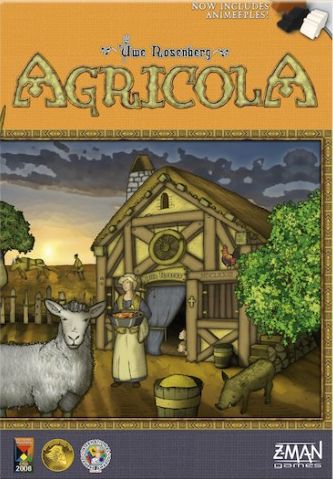
Agricola
In Agricola, you're a farmer in a wooden shack with your spouse and little else. At first, on a turn, your family gets to take only two actions, one for you and one for your spouse, as might be found among all the possibilities on a farm: plowing fields; collecting materials; building fences, and so on. There are numerous choices available, and while the game progresses you'll have more and more, as each round a new action card is flipped over, offering one more possible action. You might think about having kids in order to get more work accomplished but first you'll need to expand your house to make room - and what are you going to feed all the little rug rats? The game supports many levels of complexity, mainly through the distribution of cards which represent Minor Improvements and Occupations. In the beginner's version (called the Family Variant in the U.S. release) these cards are not used at all. For advanced play, the U.S. release includes three levels of both types of cards; Basic (E-deck), Interactive (I-deck), and Complex (K-deck), and the rulebook encourages players to experiment with the various decks and mixtures thereof. Aftermarket decks such as the Z-Deck and the L-
Sherlock Holmes Consulting Detective: Jack the Ripper & West End Adventures
Sherlock Holmes Consulting Detective: Jack the Ripper & West End Adventures is a standalone expansion to Sherlock Holmes Consulting Detective with updated graphics that features ten more cases to be solved in Sherlock Holmes' Victorian-era London, England. A "London Directory", map, and newspaper archives are included with the cases. Included are six independent "West End Adventures" cases (redesigned and updated from the 1995 expansion), and a series of four new cases based on the Jack the Ripper murders. Jack the Ripper Cases: Mary Ann Nichols Annie Chapman Elizabeth Stride, Catherine Eddowes Mary Jane Kelly West End Adventures: The Strange Case of Dr. Goldfire The Murder of Sherlock Holmes A Case of Identity The Death of a Transylvanian Count A Royal Huggermugger at the Savage Club A Simple Case of Murder
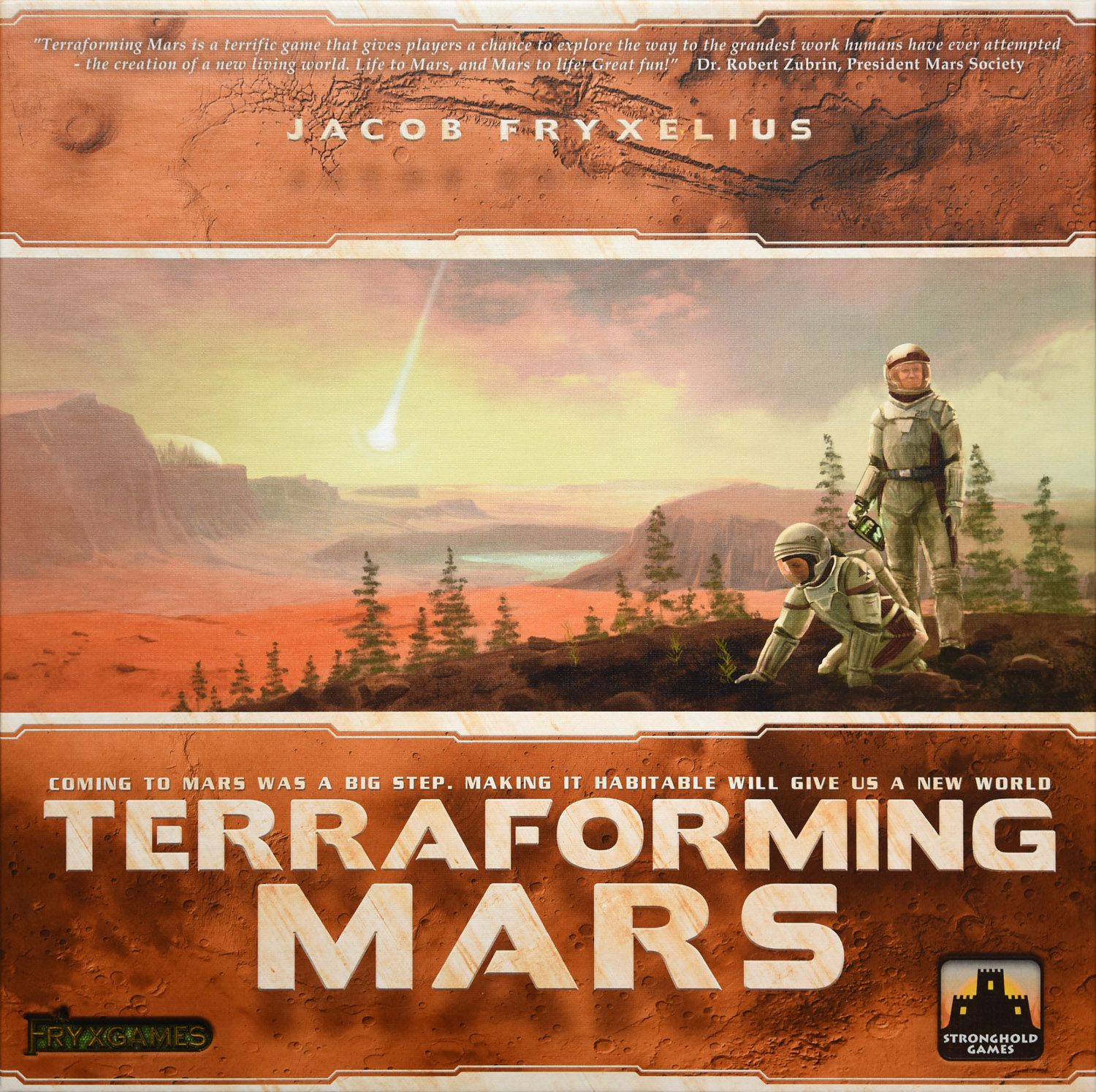
Terraforming Mars
In the 2400s, mankind begins to terraform the planet Mars. Giant corporations, sponsored by the World Government on Earth, initiate huge projects to raise the temperature, the oxygen level, and the ocean coverage until the environment is habitable. In Terraforming Mars, you play one of those corporations and work together in the terraforming process, but compete for getting victory points that are awarded not only for your contribution to the terraforming, but also for advancing human infrastructure throughout the solar system, and doing other commendable things. As a player, you acquire unique project cards (from over two hundred different ones) by buying them to your hand. The cards can give you immediate bonuses, as well as increasing your production of different resources. Many cards also have requirements and they become playable when the temperature, oxygen, or ocean coverage increases enough. Buying cards is costly, so there is a balance between buying cards and actually playing them. Standard Projects are always available to complement your hand of cards. Your basic income, as well as your basic score, are based on your Terraform Rating. However, your income is boosted by y
Dune: Imperium
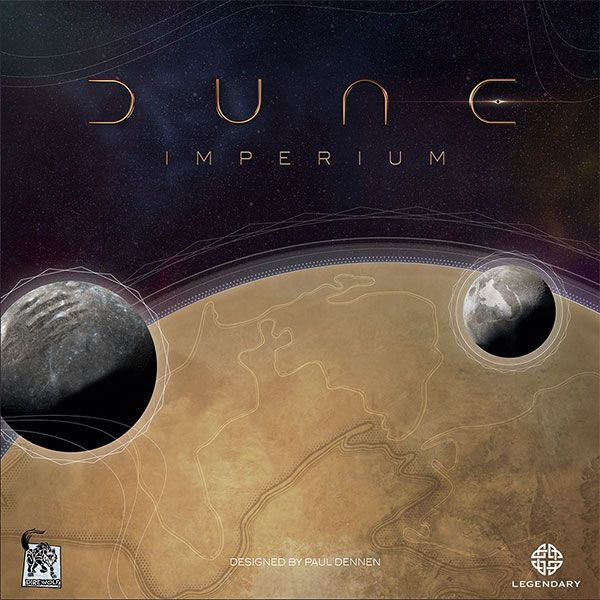
Dune: Imperium is a game that uses deck building to add a hidden information angle to traditional worker placement. It finds inspiration in elements and characters from the Dune legacy, both the new film from Legendary Pictures and the seminal literary series from Frank Herbert, Brian Herbert, and Kevin J. Anderson. As a leader of one of the Great Houses of the Landsraad, raise your banner and marshal your forces and spies. War is coming, and at the center of the conflict is Arrakis – Dune, the desert planet. You start with a unique leader card, as well as a deck identical to those of your opponents. As you acquire cards and build your deck, your choices will define your strengths and weaknesses. Cards allow you to send your Agents to certain spaces on the game board, so how your deck evolves affects your strategy. You might become more powerful militarily, able to deploy more troops than your opponents. Or you might acquire cards that give you an edge with the four political factions represented in the game: the Emperor, the Spacing Guild, the Bene Gesserit, and the Fremen. Unlike many deck building games, you don’t play your entire hand in one turn. Instead, you draw
Brass: Birmingham
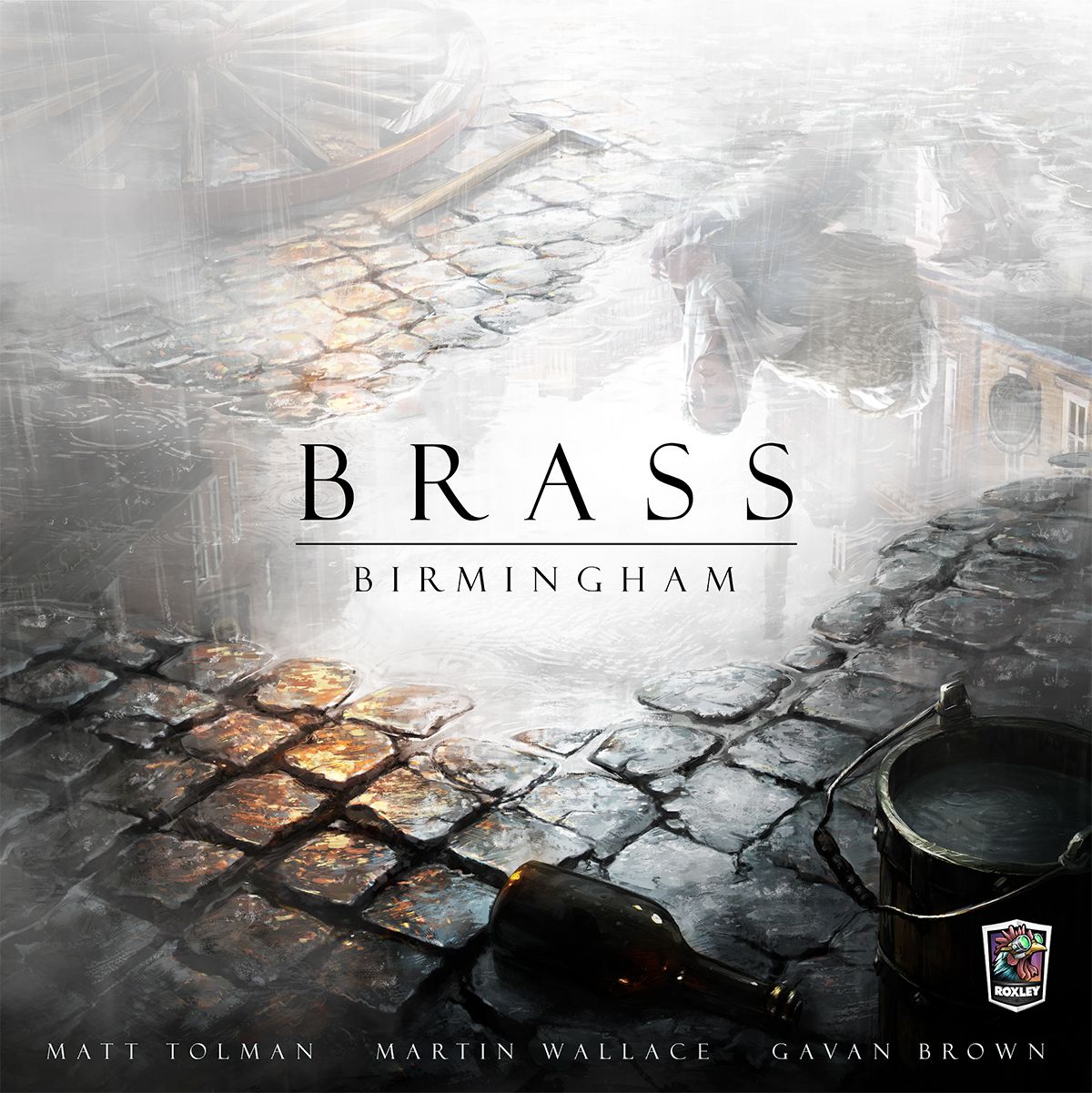
Brass: Birmingham is an economic strategy game sequel to Martin Wallace's 2007 masterpiece, Brass. Brass: Birmingham tells the story of competing entrepreneurs in Birmingham during the industrial revolution between the years of 1770 and 1870. It offers a very different story arc and experience from its predecessor. As in its predecessor, you must develop, build and establish your industries and network in an effort to exploit low or high market demands. The game is played over two halves: the canal era (years 1770-1830) and the rail era (years 1830-1870). To win the game, score the most VPs. VPs are counted at the end of each half for the canals, rails and established (flipped) industry tiles. Each round, players take turns according to the turn order track, receiving two actions to perform any of the following actions (found in the original game): 1) Build - Pay required resources and place an industry tile. 2) Network - Add a rail / canal link, expanding your network. 3) Develop - Increase the VP value of an industry. 4) Sell - Sell your cotton, manufactured goods and pottery. 5) Loan - Take a £30 loan and reduce your income. Brass: Birmingham also features a new sixth acti